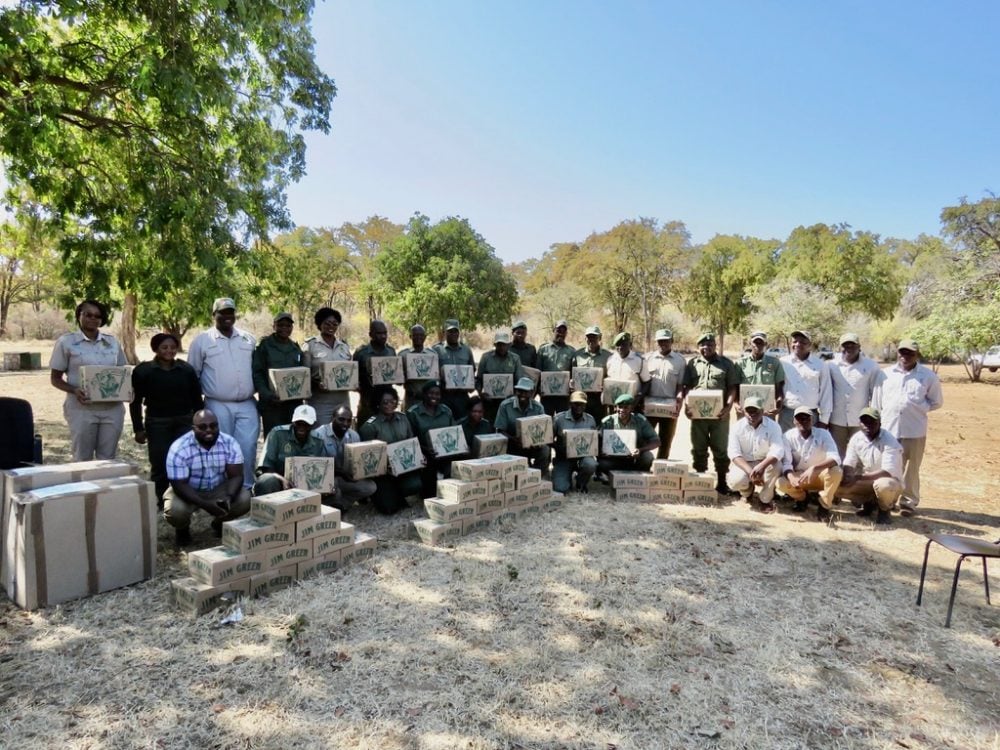
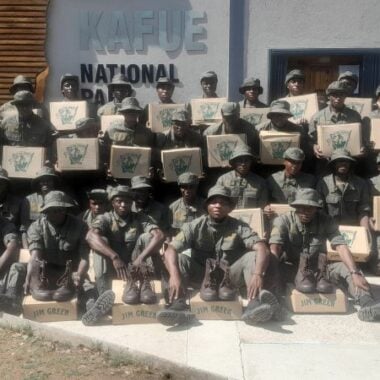
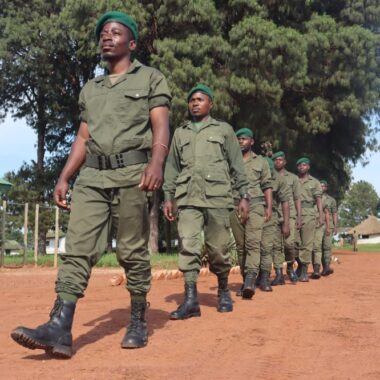
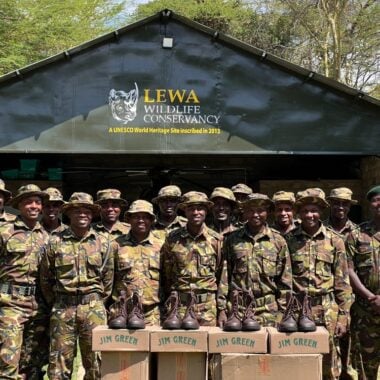
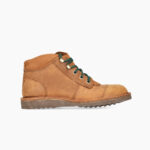
Each pair of Jim Green boots that lands in the field tells a story of dust and endurance, of men and women walking the wild line between protection and peril. In Zimbabwe’s Zambezi Valley, those boots carry rangers across some of the toughest terrain on the continent, where The Tashinga Initiative works tirelessly to keep conservation moving forward, step by steady step.
Founded in 2009, The Tashinga Initiative was born out of a simple but powerful mission: to strengthen conservation through ranger welfare. “It started as a small project in Mid-Zambezi’s Matusadona National Park,” says founder Lynne Taylor. “We just wanted to make sure rangers had the basics: food, fuel, boots, and first aid kits.”
This small beginning has since expanded across the Zambezi Valley’s protected areas to places like Charara, Hurungwe, Mana Pools, Sapi, Chewore and Dande. Whilst Charara lies at the eastern extremity of Kavango–Zambezi Transfrontier Conservation Area (KAZA), the protected areas of the Zambezi Valley lie beyond the KAZA boundaries.
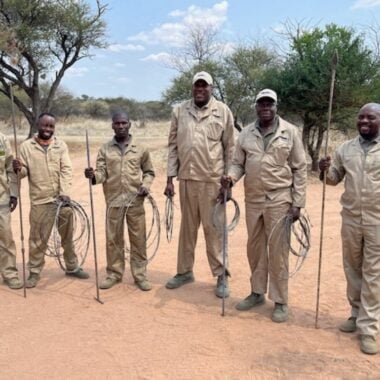
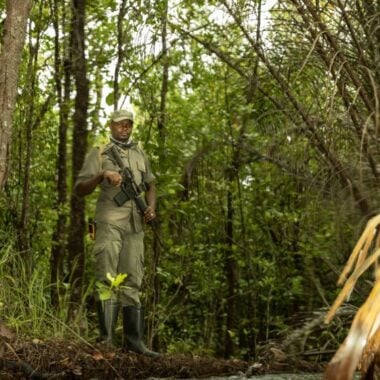
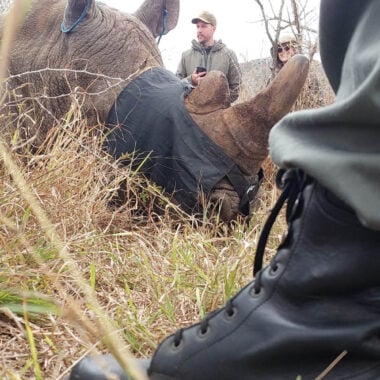
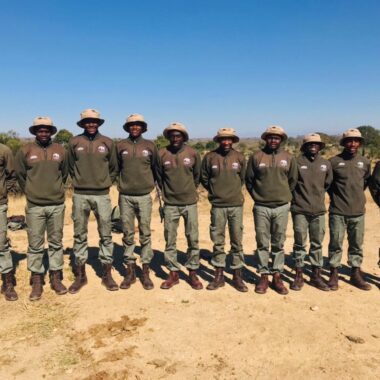
Here, the rangers’ daily reality is as demanding as it is dangerous. They patrol on foot through thick jesse bush, carry out riverine patrols in small boats with outboard engines, and hike up escarpments that rise sharply from the valley floor. Temperatures soar beyond 40°C. Water is scarce. Armed Poachers are present in the same landscapes as those which support wildlife such as Elephants, buffalo, and lions. And yet, each patrol is a statement of commitment, a physical manifestation of their promise to protect.
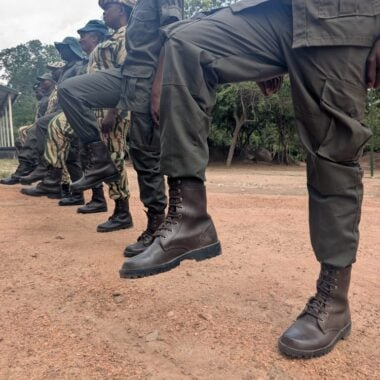
As Lynne explains, providing rangers with proper boots isn’t just about comfort; it’s about dignity. “It tells them they’re valued,” she says. For rangers walking long distances through rugged terrain, good boots are a form of protection in themselves. They prevent blisters that turn to infections, shield against snakes, thorns and sharp rocks, and provide the confidence to move quickly when it matters most.
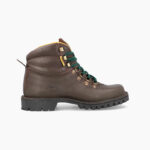
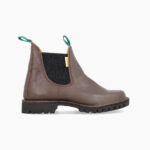
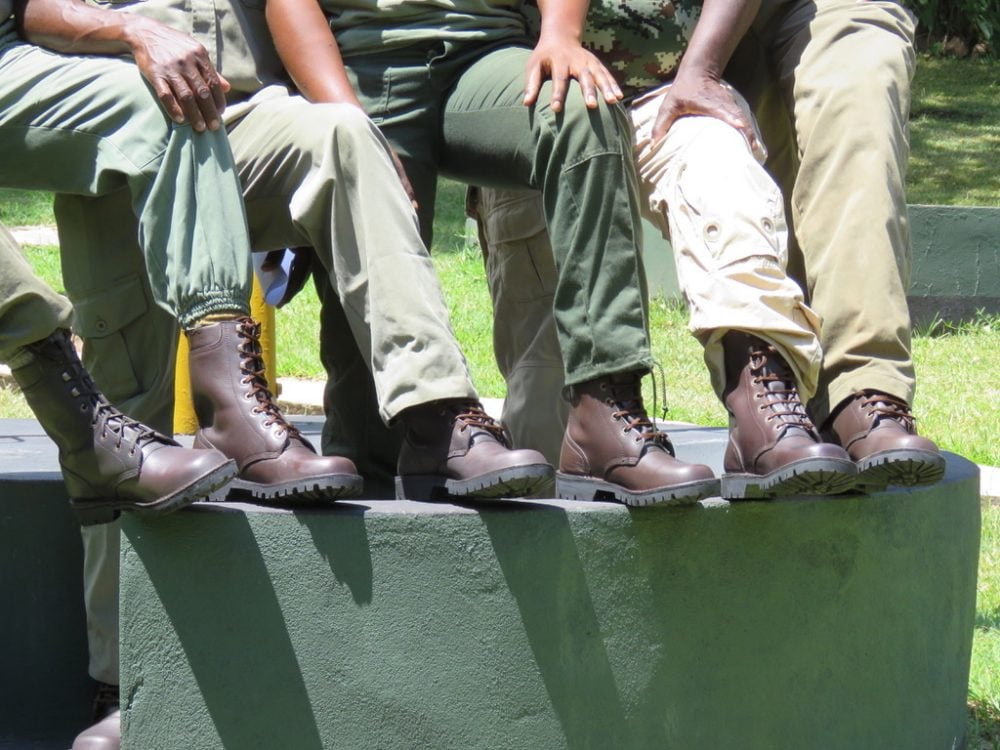
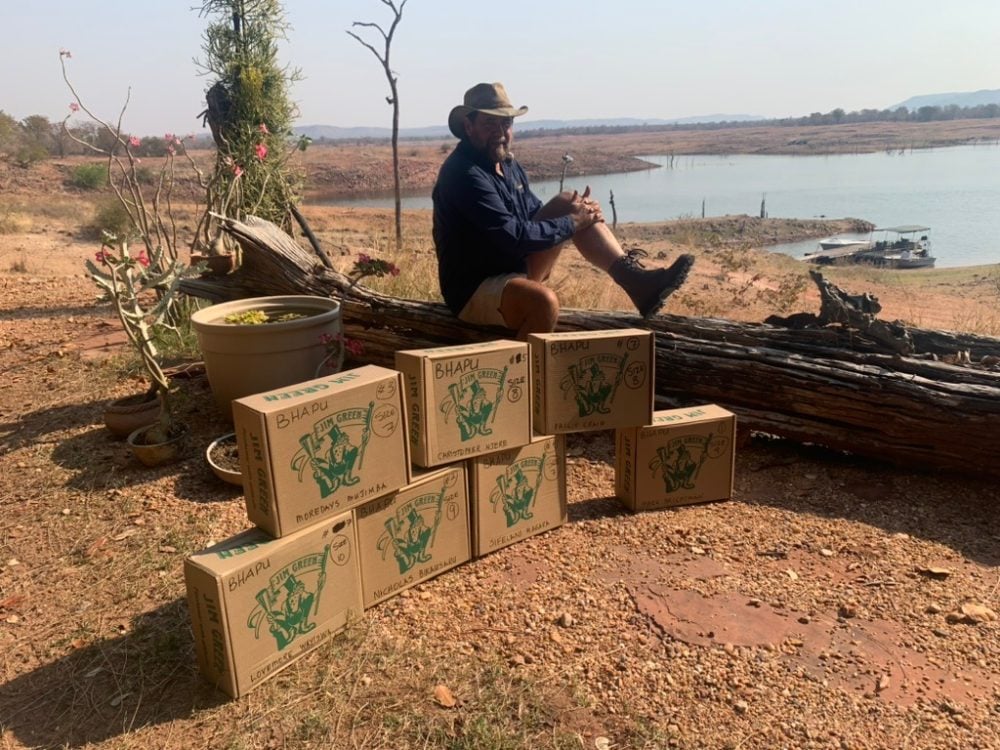
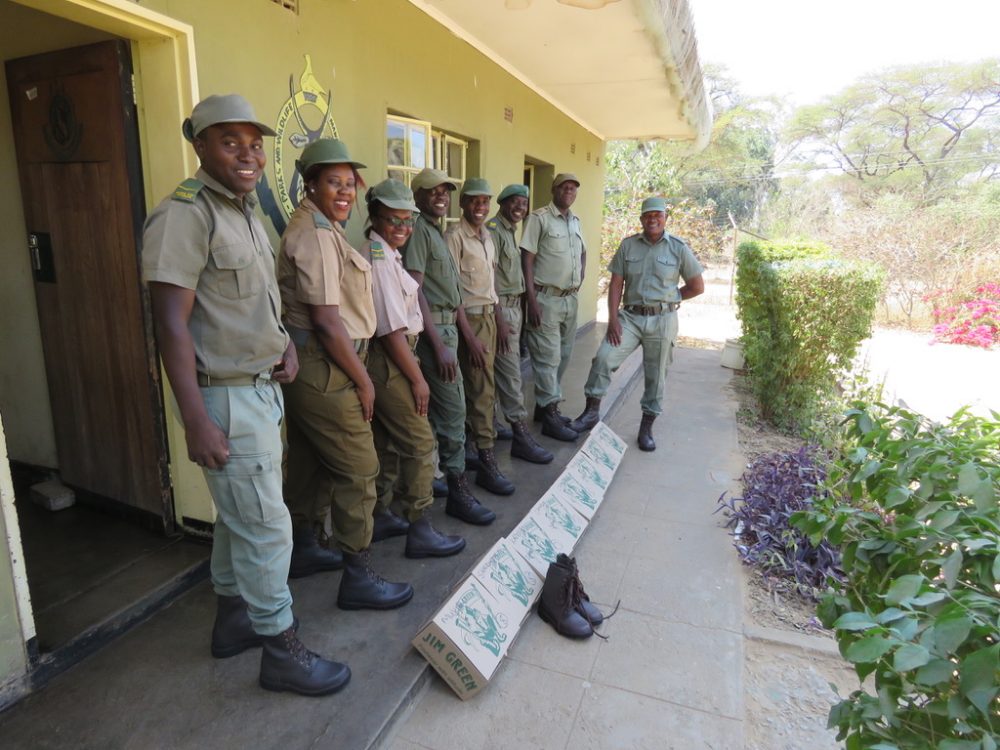
That’s what made the partnership with Jim Green and the Game Rangers Association of Africa (GRAA) such a natural fit. Through the Boots for Rangers initiative, durable South African-made Jim Greens are being delivered directly to rangers in remote outposts across Africa. In remote areas like Mana Pools and Chewore, the difference is immediate. “These guys are the first line of defence,” Lynne says. “They’re the ones out there every single day, often walking 10, 20 kilometres in brutal heat.”
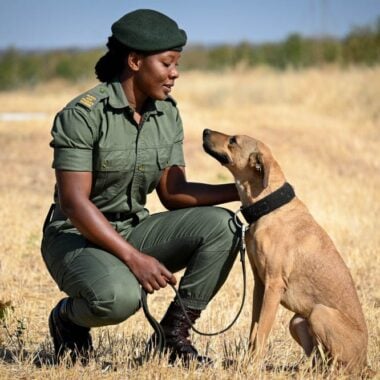
Beyond the physical support, initiatives like this strengthen morale, a crucial but often invisible element of conservation. Rangers in Zimbabwe work under immense pressure: long patrols, limited resources, and the emotional toll of confronting wildlife crime. The Tashinga Initiative’s focus on welfare recognises that conservation can’t survive without the people at its core.
In addition to providing essential kits, the organisation has supported ranger stations with water systems, solar power, communications, and community outreach. They ensure rangers’ families are cared for when tragedy strikes through the co-funded “RangerProtect” insurance scheme with GRAA. It’s a holistic approach that mirrors the landscapes they protect: interconnected, resilient, and vital.
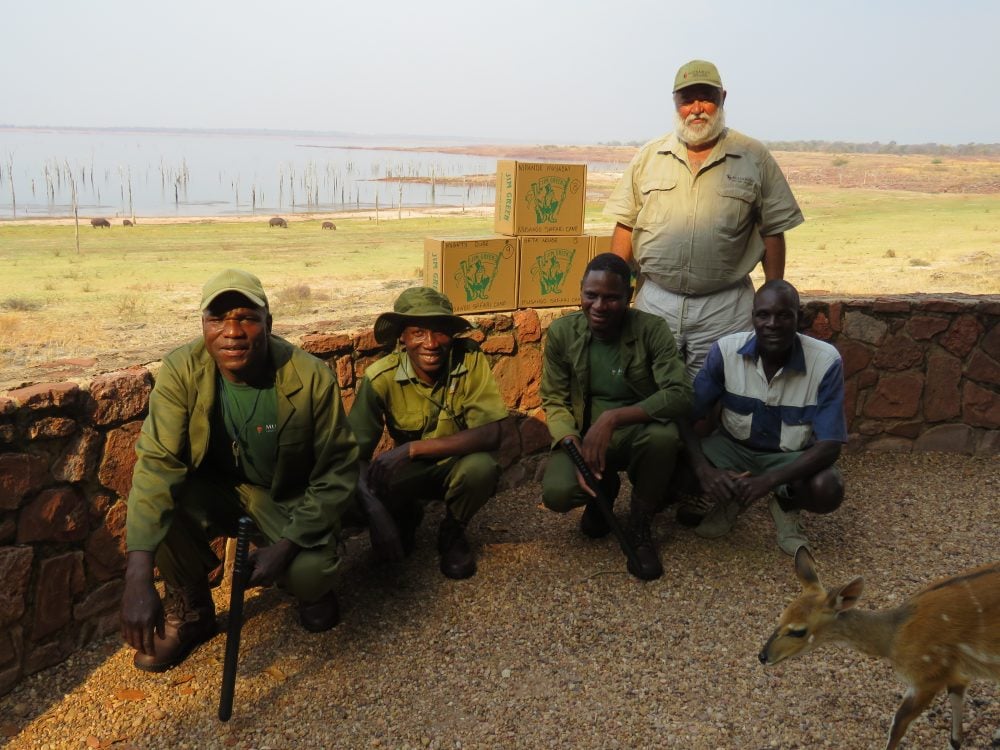
Today, The Tashinga Initiative continues to grow its impact through collaboration. Working alongside Zimbabwe Parks and Wildlife Management Authority (ZimParks), GRAA, and partners like Jim Green, the team is expanding its support network, ensuring that each donation (whether it’s a boot, a radio, or a roof) directly strengthens the field teams who stand between Africa’s wildlife and its threats. “We’ve always worked quietly behind the scenes. We don’t do big PR campaigns,” Lynne adds. “Our focus has always been about what rangers actually need to do their job effectively and safely.”
Progress in the Zambezi Valley takes time. It’s built step by step, day by day. “If a ranger doesn’t have boots, he can’t do his job. It’s as simple as that,” says Lynne.
Cheers,
The Jim Green Team
Through our Boots for Rangers initiative, run in partnership with the Game Rangers Association of Africa, we donate one pair of boots to a ranger for every ten pairs sold from our Ranger range. These boots are now supporting conservation teams at sites across Africa, with over 6,000 pairs already on the ground.