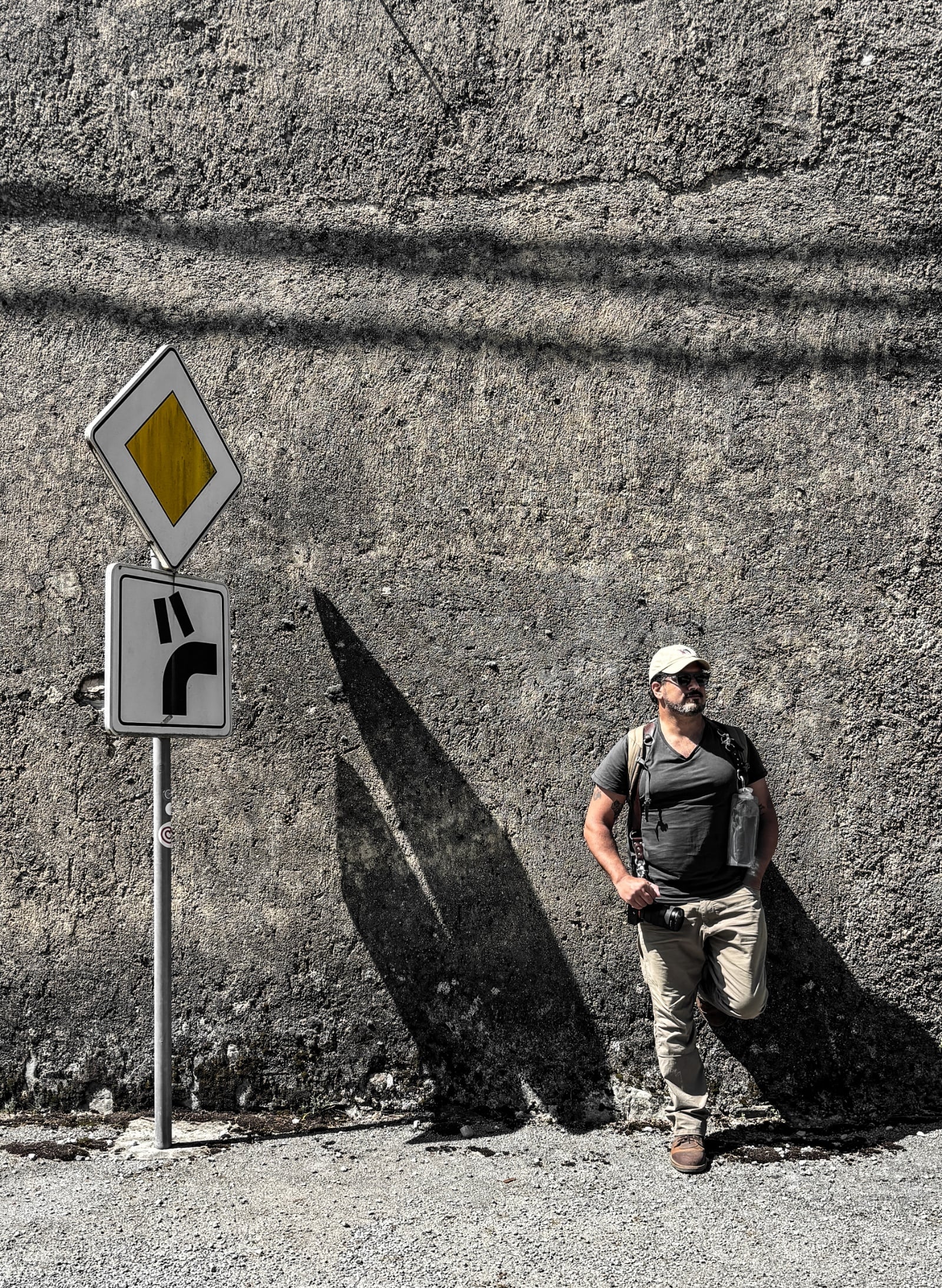
Roberto Serrini has a simple rule when arriving somewhere unfamiliar.
“Grab a beer and talk to a local,” he says.
“The more perspective you get,” he says, “the easier it is to be happy on earth.”
He doesn’t believe in elaborate itineraries, spreadsheets, or endless restaurant lists saved on your phone before boarding the flight. After more than two decades of travelling, writing, and directing films around the world, he still prefers to let a place introduce itself properly. “You want it to hit you full force,” he says. “Naked, raw, and let it wash over you.”
For Roberto, travel has never been about collecting passport stamps or ticking landmarks off a list. It’s about perspective.
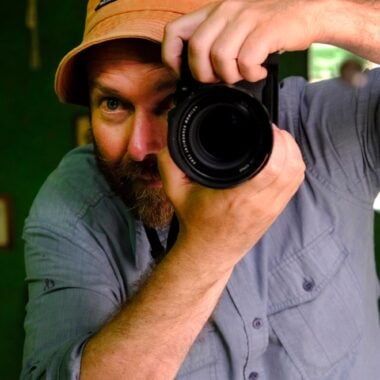
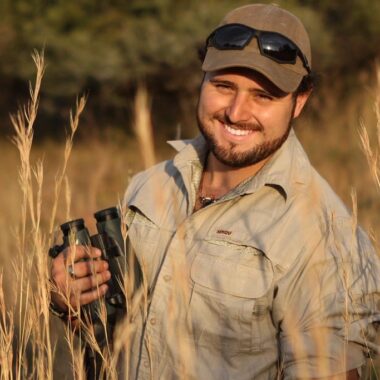
Born and raised in New York, Roberto describes himself as “a hyphenate”—a commercial director, travel journalist, photographer, and perpetual traveller whose work has taken him across continents. One part of his career involves directing campaigns for global brands like Nike, Google, and Apple. The other sees him writing about places, cultures, and the details that most travellers miss. It’s perhaps an unusual balance, but definitely an intentional one.
“Travel writing pays really well, just not in money,” he jokes, “but fortunately I also work in advertising, which happily supports my bon-vivant lifestyle.”
Long before film sets and airport lounges, though, there was photography. His grandfather gave him a camera early on, sparking an obsession with images and observation. Roberto still shoots film when he can, often with his old Canon A-1. Born in the late 1970s, he grew up at a strange crossroads: old enough to know analogue photography, young enough to witness the digital shift happen in real time. “When I saw the move from film to digital coming, I got into filmmaking,” he says. “And I never really looked back.”
Travel followed naturally. His original ambition had always been some version of becoming a travel photographer or filmmaker, and over time, the lines between professions blurred. Hospitality jobs gave way to creative work, commercial directing opened doors to the world, and journalism became a way to stay curious.
If there’s one idea that runs through everything Roberto does, it’s that travel changes the way you see. “I think perspective is probably the most important thing a human can have,” he says. “Beyond religion or faith, money or love, perspective is key for understanding the world.”
Travel, in his view, offers something increasingly rare: the chance to step outside yourself. To arrive somewhere unfamiliar and sit with discomfort. To encounter different ways of living, different assumptions, different rhythms. To understand a place on its own terms rather than forcing it into your own frame of reference. “The more perspective you get,” he says, “the easier it is to be happy on earth.”
It’s also why he’s sceptical of how modern travel often works. Social media, he says, has made it too easy to experience destinations before ever arriving. People research endlessly, save the same restaurants, chase the same photographs, and unknowingly flatten surprise into predictability.
“People are tasting the food before they order it,” he says. Instead, he prefers discovery. Arriving somewhere and paying attention. “A walk, a café, a conversation,” he says. “Interact with the city and let it reveal itself.”
That mindset carries into his commercial work, too. In an industry crowded with specialists, Roberto believes his edge comes from bringing a wider frame of reference into projects. Inspiration might come from Antarctica, South Africa, China, or a tiny village halfway across the world. “If you haven’t witnessed the world—the food, the music, the culture—how can you even try to be creative or different?” he says.
One project that stayed with him involved documenting a remote community where a woman had lost her child to dengue fever because of limited healthcare education. “It changed my whole idea about what life is about,” he says. “That’s where I discovered perspective.”
One project that stayed with him involved documenting a remote community in Cambodia for a humanitarian aid foundation. “The entire village was completely cut off from civilisation. No power, no phones, nothing. One woman, however, had an old TV, so I asked what her favourite show to watch was. She said she didn’t understand the question, because that was a lamp. She would pedal a bike to power a scooter battery to make the TV glow. She had no idea what a TV was. To her, it was just a lamp that gave her an extra hour of light in the dark jungle. That’s where I discovered what perspective really is. Seeing reality from two very different, but equally true sides.”
For someone who spends much of his life moving, there is still one place he returns to every year: Italy. Roberto is Italian by heritage, with family roots in Rome, and speaks about the country less as a destination than a form of grounding. “I find it very soothing,” he says.
Recently, that connection deepened through a documentary project inspired by Italy in Bocca, a cult cookbook series from the 1970s. The work took him through Rome’s markets, kitchens, and conversations with chefs, eventually leading to an unexpected moment: tracking down the original illustrator of the books and inviting him to dinner. “He said, ‘I can’t believe you found me,’” Roberto recalls. “And I was thinking, I can’t believe you’re sitting here.”
Another recent project brought him to Brescia in northern Italy, where he filmed a campaign about the city’s opera festival and Roman history. It’s exactly the kind of place Roberto loves most. Somewhere that’s beautiful, layered, and overlooked. “It’s not the Amalfi Coast,” he says. “Those are the places I get excited about.”
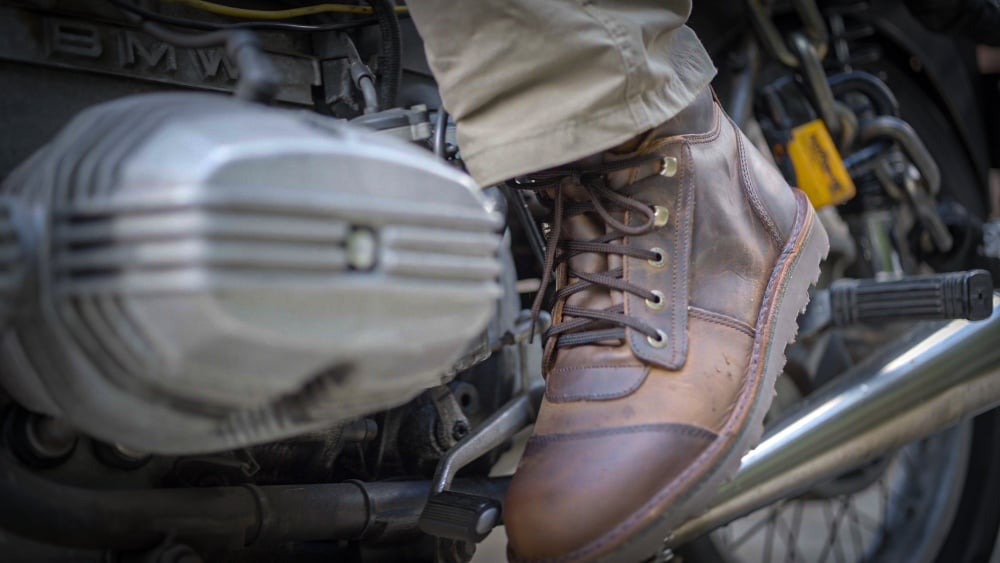
For all the travel, though, one surprisingly difficult problem persisted: shoes. “The thing that hinders me most in both worlds is footwear,” he says. As someone who doesn’t check luggage, wears a size 13, and constantly moves between film sets, long walks, airports, client dinners, and outdoor shoots, Roberto spent years searching for a pair capable of doing everything. “They have to hike across the country, go to the gym, go to dinner with clients, stand for 12 hours,” he says. “They have to be every type of shoe in one.”
Footwear, in Roberto’s world, also comes with history. Before World War II, his family ran a shoe store in Rome, and opinions on shoes still matter in the Serrini family. “If I don’t impress my father with them,” he jokes, “it’s a big issue.”
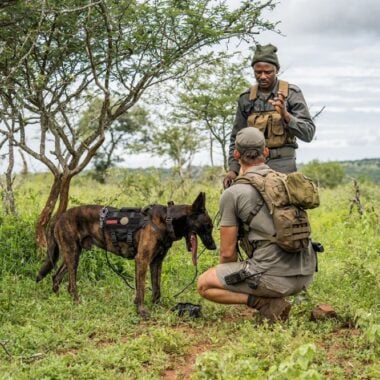
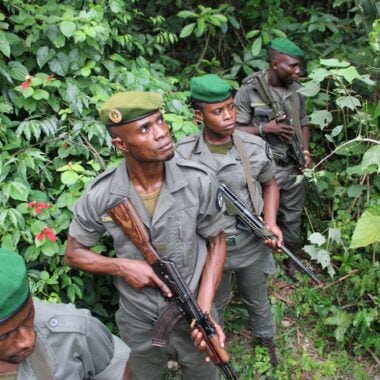
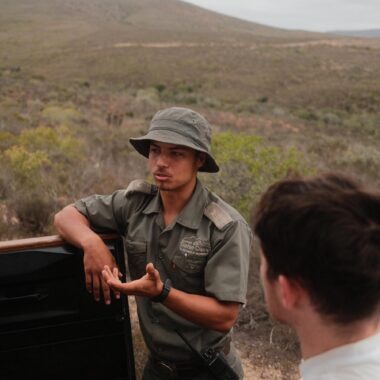
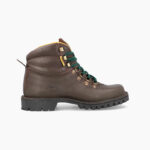
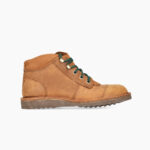
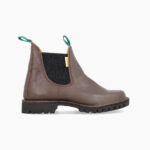
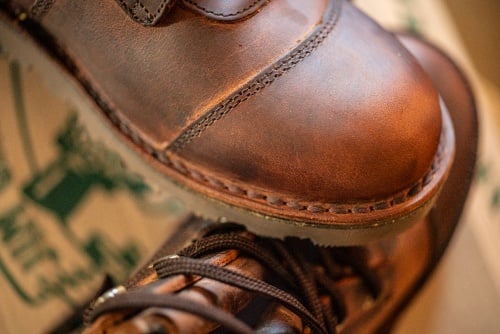
So when he came across Jim Green, he was sceptical. “I thought, okay, these are made for African rangers…this sounds very Hemingway,” he laughs. “But I was worried they’d be heavy or clunky.”
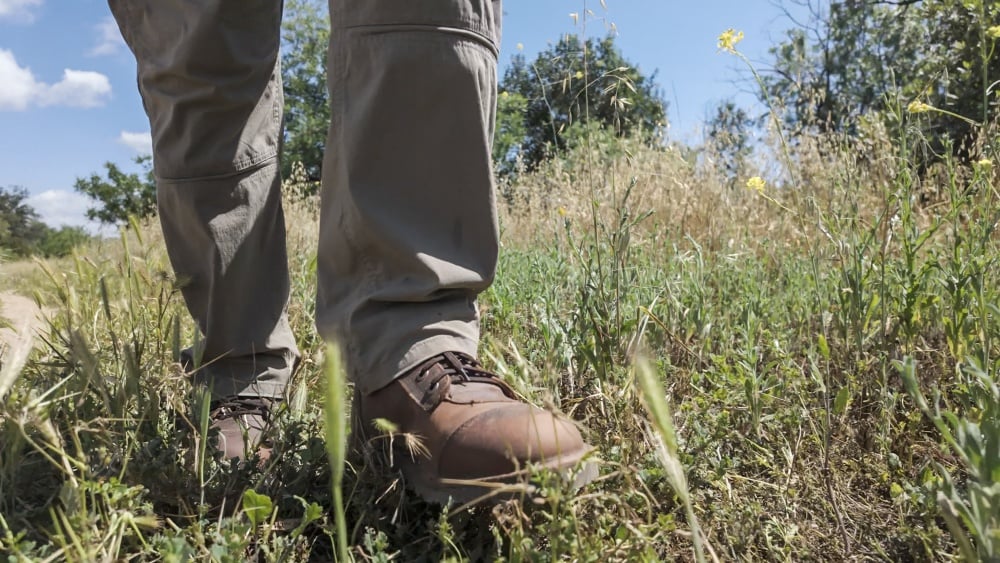
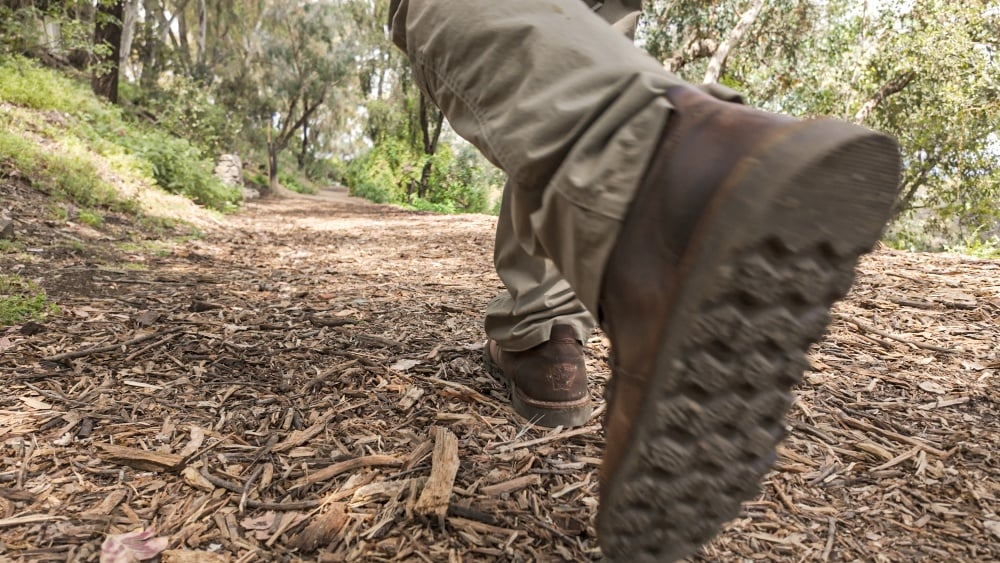
Instead, his African Rangers fit immediately. He didn’t even have to break them in. They were light enough to travel with, rugged enough for long days, and versatile enough to move between different worlds.
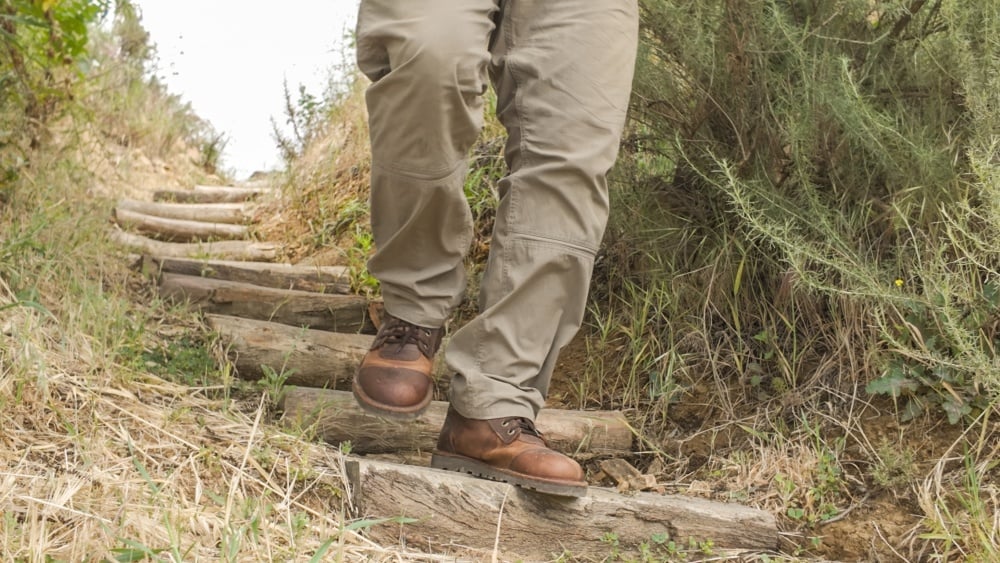
He recently wore the boots on a ten-day hike across Slovenia. Afterwards, he went straight to dinner. “That’s the key to a good shoe,” he says. “You don’t think about them.”
Cheers,
The Jim Green Team