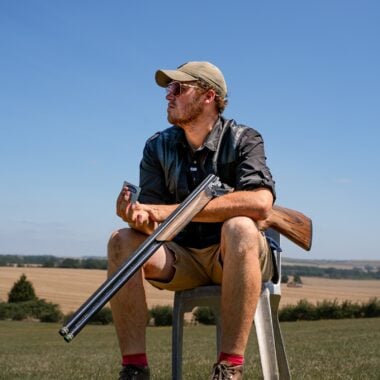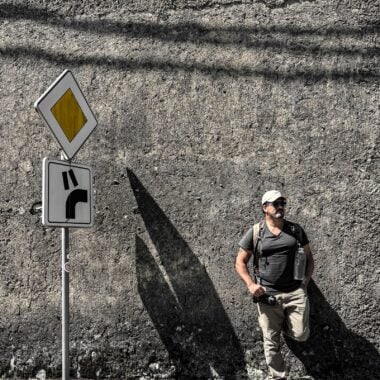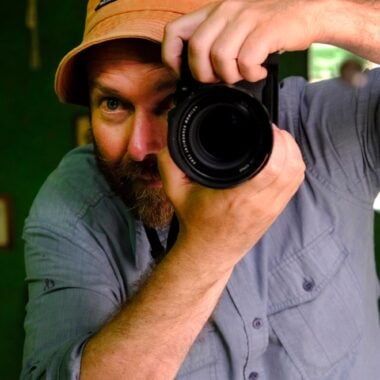
Growing up at Cape Point gives you a different relationship with the outdoors.
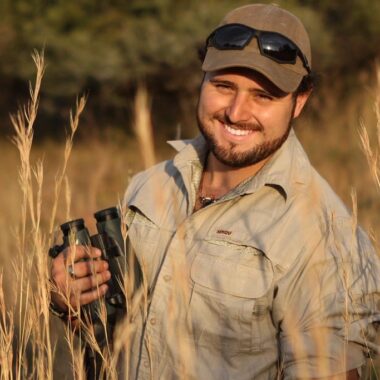
For Steve Mecinski, better known online as The Flying Dutchman, nature wasn’t a place he visited. It was home. He was born and raised inside what is now the Cape of Good Hope section of Table Mountain National Park, where his father worked as park manager. It was his backyard long before Cape Point became one of South Africa’s busiest tourist landmarks.
“I think it’s an unrivalled experience,” he says. “It really shaped the person I am today.”
The Atlantic Ocean, fynbos-covered hills, and the smell of salt in the wind left a permanent imprint. Even now, after years of travelling internationally, conservation work, and time spent living abroad, he still describes it as home. “There’s something about that place,” he says. “The smells, the feeling of standing at the edge of the world. It stays with you.”
After his father passed away, both his parents’ ashes were scattered at Cape Point, leaving a deeply personal imprint. “When I go back now, it’s a mixed feeling,” he says. “It used to be my backyard. Now I’m there as a visitor.”
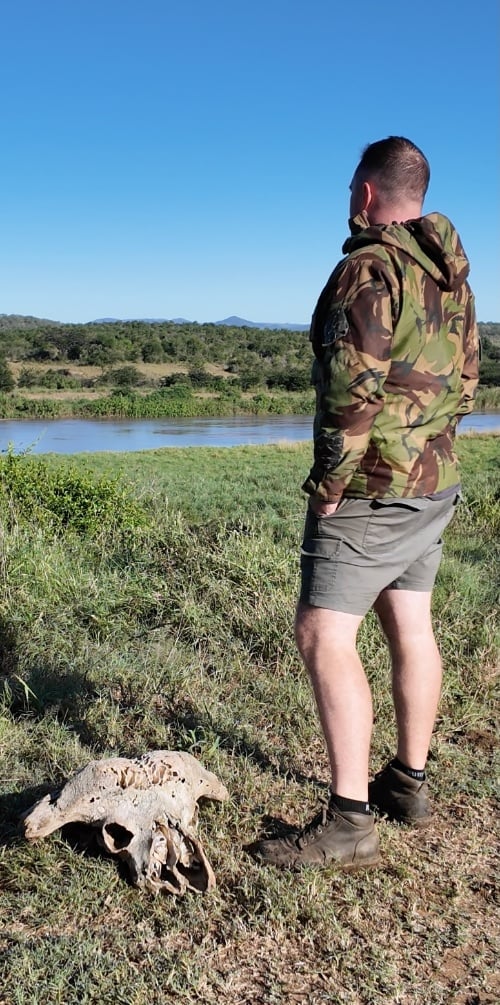
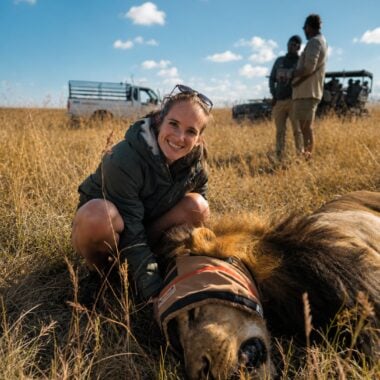
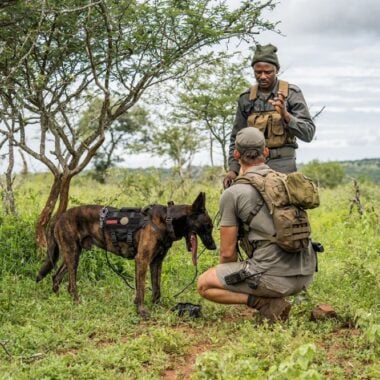
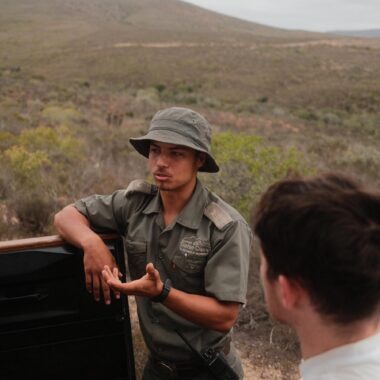
Mecinski followed closely in his father’s footsteps, building a career that moves between tourism and wildlife protection. Today, he runs multiple ventures, including Echo Wild Africa, a tourism company based in the Netherlands, and an e-bike eco-tour business in St Lucia, KwaZulu-Natal. Alongside this, he volunteers as an honorary anti-poaching officer with Ezemvelo KZN Wildlife. It may sound like several lives rolled into one, but for him, the overlap feels natural. “Tourism funds conservation,” he says simply.
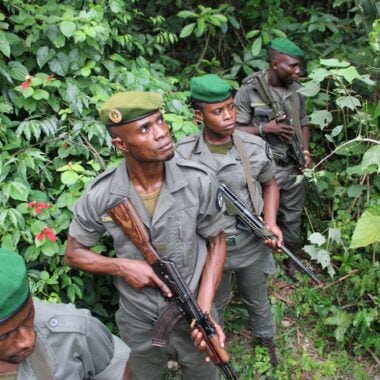
After working as a safari guide in St Lucia, he launched his own tourism business in 2012. At this point, rhino poaching escalated across KwaZulu-Natal, particularly around Hluhluwe-iMfoloz. “I got sick and tired of seeing carcasses,” he says. “Showing clients poaching incidents instead of wildlife.” That frustration pushed him further into anti-poaching and wildlife protection. He went on to manage anti-poaching units in KwaZulu-Natal before joining the World Wide Fund for Nature (WWF) as a technical law-enforcement advisor, a role that eventually took him to Southeast Asia.
One of the projects he remains most proud of involved tiger conservation in Cambodia. After years without a surviving tiger population, efforts were underway to reintroduce the species to protected landscapes. “It was incredible to be involved in something like that,” he says.
Later, during the COVID-19 pandemic, he relocated to the Netherlands with his Dutch partner. With international travel paused, he used the time to formally launch Echo Wild Africa online, helping travellers discover conservation-focused experiences across Africa.
His Dutch connection runs deep. The “Flying Dutchman” nickname traces back to his maternal grandfather, who was born in the Netherlands and survived internment in Indonesia during the Second World War before eventually settling in South Africa. His broader family history stretches across the Netherlands, Poland, Scotland, Britain, and South Africa.
Despite all the travel, southern Africa remains the place he speaks about most passionately. Ask him about overlooked destinations, and he doesn’t hesitate. For him, one of South Africa’s most special places is the wilderness section of Hluhluwe-iMfolozi Park. “There’s very little vehicle access,” he says. “You explore it on foot.” Multi-day wilderness trails take visitors deep into the landscape, carrying gear, sleeping under the stars, and moving slowly through terrain where elephants, rhinos, and predators still roam freely. “It’s a chance to re-earth yourself,” he says. “Leave the phones behind. Take your watch off. Just reconnect.”
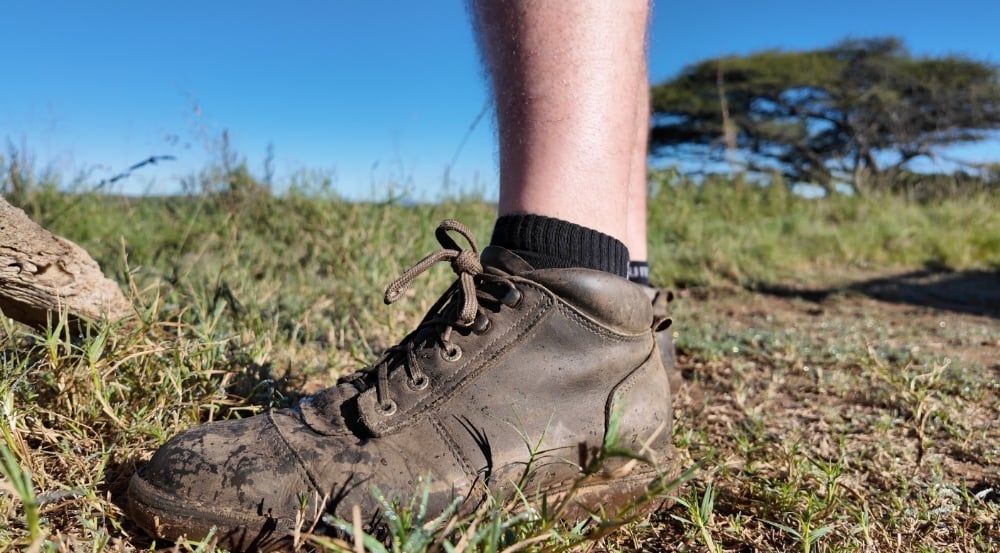
Zimbabwe’s Mana Pools National Park sits high on his list too, though he worries about the growing influence of social media. “Unfortunately, it’s starting to get recognition,” he says with a laugh.
It’s a familiar dichotomy for someone working across both tourism and conservation. You want people to experience wild places, but you also want to protect what made them special in the first place.
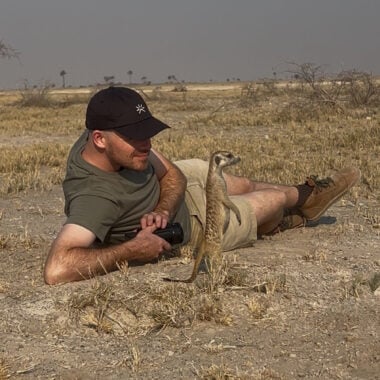
This also explains why his e-bike tourism business in St Lucia feels so personal. Rather than driving heavy safari vehicles, guests move quietly through iSimangaliso Wetland Park on electric bikes, covering more ground than they can on foot while staying immersed in the environment. “It’s silent,” he says. “You observe wildlife better. You move enough to explore,” he says, “but slowly enough to actually see things.”
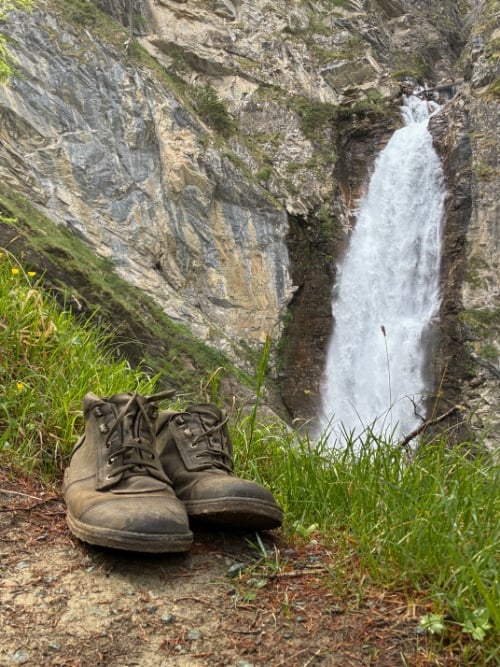
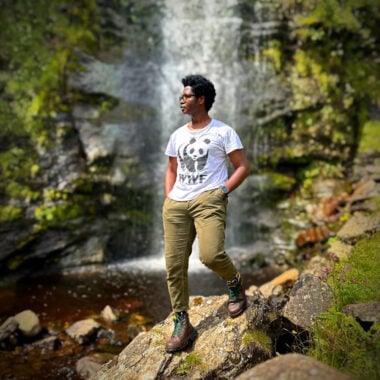
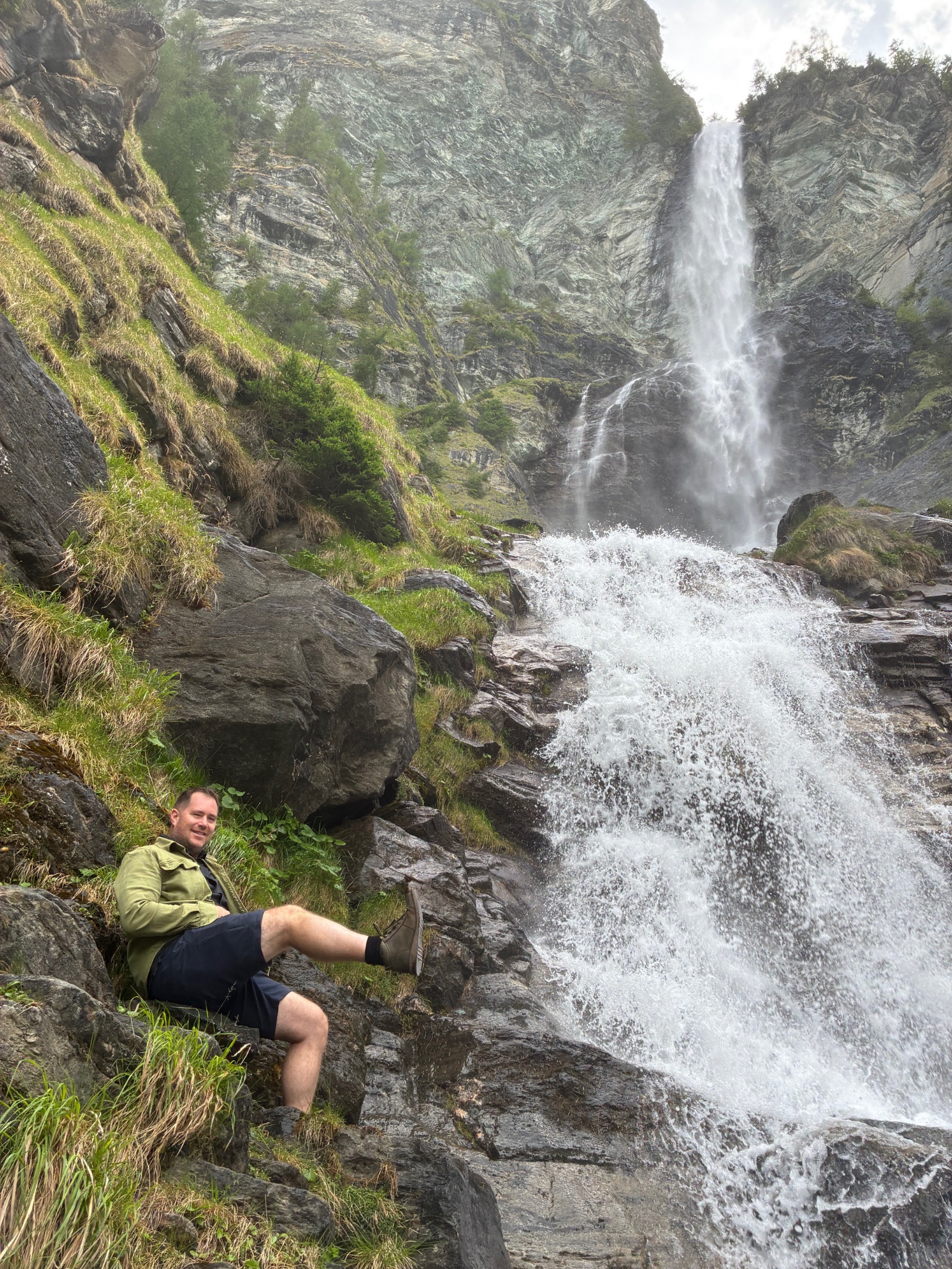
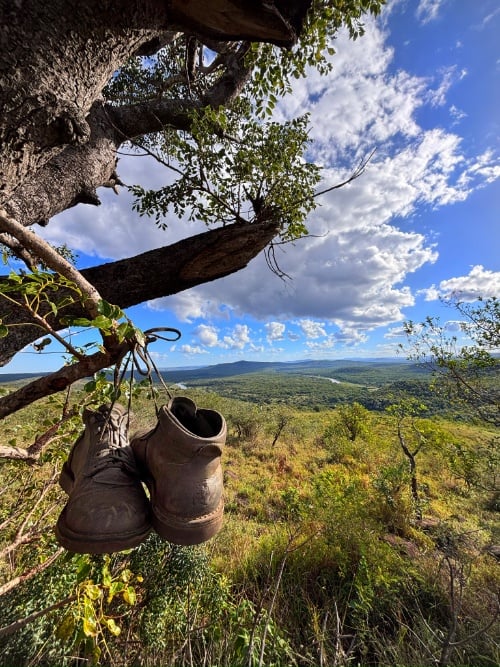
Most of Mecinski’s work, whether in tourism or conservation, happens outdoors and on the move. A good pair of boots matters when your days are spent covering long distances in unpredictable terrain.
He first came across Jim Green through conservation circles, when anti-poaching teams he worked alongside received boots through ranger initiatives. Finding footwear that worked had always been difficult. He has broad feet and spends long hours covering demanding terrain.
“I put my feet in, and they fit like a glove,” he says.
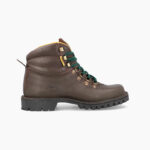
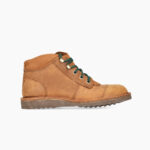
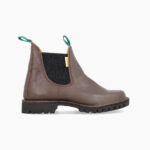
Now the African Rangers are his go-to. He owns three pairs. “They work for everything,” he says. “I can walk 25 kilometres in difficult terrain, and then polish them up and wear them with jeans.” He’s already eyeing another pair for winter travel in Europe.
There’s usually another trip on the horizon. At the time of our call, he was getting ready to head to Slovenia to try tracking bears. For someone who grew up at Cape Point, always looking out at what was beyond the horizon, staying still was probably never going to be an option.
Cheers,
The Jim Green Team